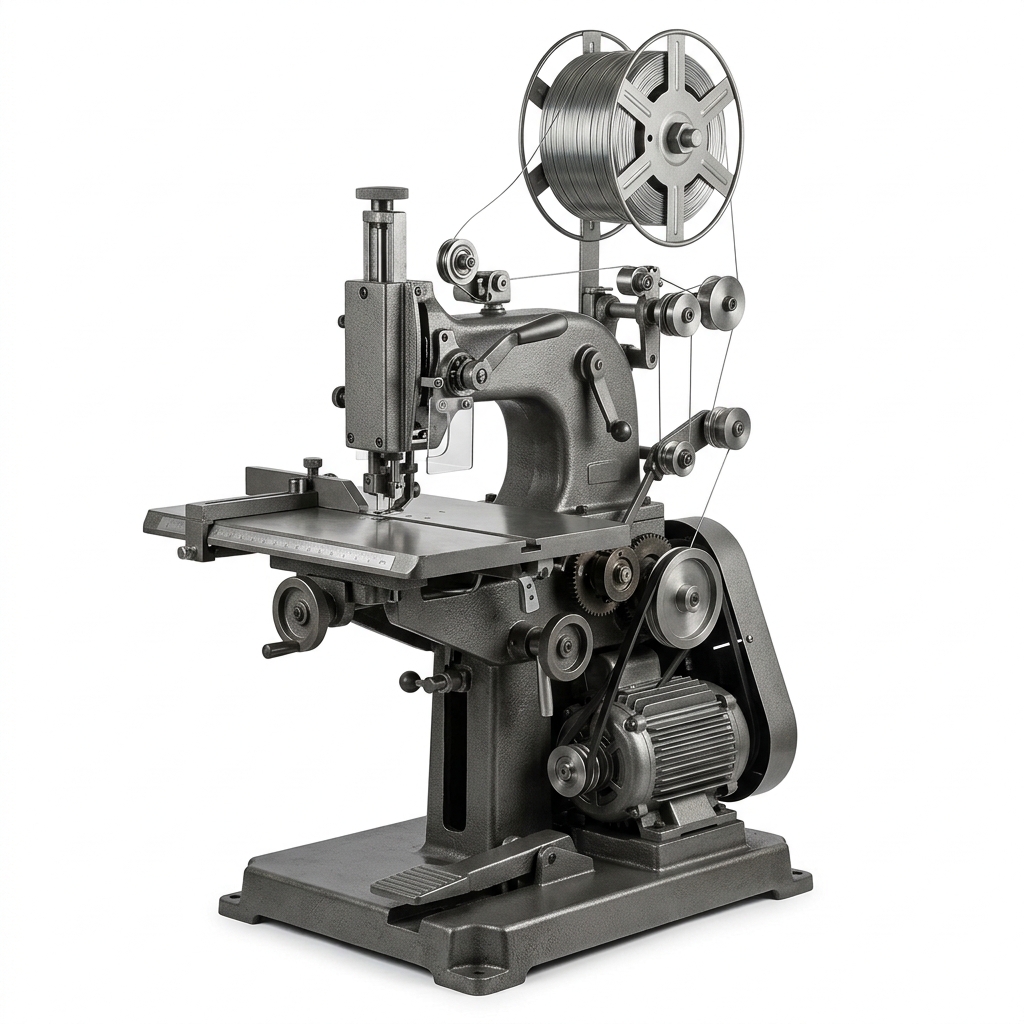
Product Description
Bangasree Machinery, your dependable partner, excels in crafting premium Notebook Stitching Machines that form the backbone of any notebook production facility. Our range features manual, automatic, and semi-automatic models, each meticulously designed to deliver secure, consistent binding on every notebook. Whether you are producing thin exercise books or thick registers, our stitching machines ensure pages stay firmly bound throughout the notebook's lifetime. These machines are engineered to work seamlessly with our notebook making and cutting machines for a complete production workflow.
How the Notebook Stitching Machine Works
The stitching process begins with the operator placing a collated stack of folded paper onto the machine's loading platform. In manual models, the operator positions the stack under the stitching head and activates the machine using a foot pedal. The stitching head drives a pre-formed wire staple through the paper stack and clinches it on the underside, creating a secure bind. In automatic models, a conveyor system feeds the stacks continuously through multiple stitching heads that bind at high speed. The wire is drawn from a spool, cut to length, formed into a staple shape, driven through the paper, and folded—all within milliseconds. Adjustable stitch spacing allows operators to set one, two, or three stitches along the spine depending on notebook thickness and size requirements.
Key Features and Specifications
- Manual Model Production: 3000-3500 notebooks per day with 150 kg machine weight
- Automatic Model Production: 5000-6000 notebooks per day with 250 kg machine weight
- Stitch Size: 5/16 inch for manual and 5/8 inch for automatic models
- Power Requirement: Only 0.5 KW for both models, highly energy efficient
- Heavy-duty steel stitching heads rated for millions of cycles
- Adjustable paper thickness settings for 20 to 200 page notebooks
- Low-maintenance design with easily replaceable staple magazines
- Anti-jam mechanism that prevents wire breakage and machine stoppages
Benefits for Notebook Manufacturers
Reliable stitching is what separates a quality notebook from a poorly made one. Our machines deliver consistent stitch strength across every notebook in a production run, which means fewer customer complaints and returns. The low power requirement of just 0.5 KW keeps your electricity costs minimal even during extended production shifts. The compact footprint of both manual and automatic models allows them to fit into small workshops without requiring structural modifications. With fast changeover between notebook sizes, you can switch production runs quickly, reducing downtime between orders.
Applications and Use Cases
Notebook stitching machines serve a diverse range of users across the stationery supply chain. School notebook manufacturers use them daily to produce exercise books, practical notebooks, and exam pads. Office supply companies rely on them for binding registers, attendance books, and ledger pads. Government agencies that supply stationery to schools and offices depend on high-volume automatic stitching machines for bulk orders. Custom notebook brands that offer personalized journals and planners also use our machines for small-batch production where flexibility and quick setup are essential.
Why Choose Bangasree Machinery
Bangasree Machinery stands out as a leading manufacturer of notebook stitching machines in Kolkata due to our focus on quality and customer satisfaction. Each machine is built using precision-machined components and undergoes extensive testing before shipment. We provide complete installation support, operator training, and a detailed user manual with every purchase. Our nationwide service network ensures prompt assistance if you ever need technical support. We also offer competitive pricing directly from our factory, eliminating middleman markups and giving you the best value for your investment.
Maintenance Tips for Maximum Lifespan
Proper care of your stitching machine ensures it operates smoothly for years. Clean the stitching head area daily to remove wire clippings and paper dust that can accumulate and cause jams. Lubricate the wire feeding mechanism every 50 operating hours to prevent friction wear on the cutting and forming components. Inspect the staple magazine regularly for signs of deformation and replace it if staples are not forming correctly. Check the clinching plate alignment to ensure staples fold flat on the underside of notebooks. Keep spare wire spools and staple magazines in stock to avoid production interruptions.
Related Products